Catalina’s virginity deception
The Constant PrincessCatalina’s virginity deception was a calculated claim about her marriage to Arthur, Prince of Wales: she told her household and Spain’s representatives that it had never been consummated. The claim was meant to preserve her future in England by making marriage to Arthur’s brother, Harry Tudor, possible. Its consequences soon outran that original purpose. Catalina carried the assertion into a different proposed marriage, gave it visible support after her wedding, and later relied on Henry VIII’s reluctance to contradict her when the validity of their marriage was challenged.
The Claim and Its First Purpose
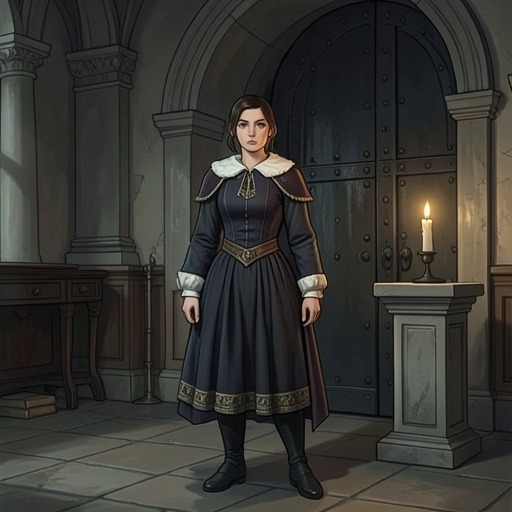
The deception takes shape after Catalina’s links with her former life are being severed. Rather than break down, she sends the maids away and asks Doña Elvira to write to her parents that Arthur’s marriage had not been consummated and that she had remained a virgin. Doña Elvira objects that the court had witnessed the couple being bedded and reminds her that they had been together regularly. Catalina answers that Arthur had been impotent and that their attempts had produced no result. She presents the claim as a painful truth about their marriage, not as a tactic.
Catalina’s explanation to Doña Elvira also makes the political stakes explicit. She sees two futures: remaining in England through a new marriage, or returning to her homeland in mourning and losing her place in public life. She argues that, if the first marriage was not consummated, there could be no objection on that basis to marrying Arthur’s brother. She directs Doña Elvira to tell a new emissary that she wishes to be Princess of Wales again and that negotiations should concern her next wedding, not the provision due to her as a widow. The assertion is thus framed as both a statement about the past and a means of specifying the future she intends to pursue.
A Claim Recast by Political Circumstance
The proposed match with Harry does not remain the only possible destination for Catalina’s claim. When Henry VII proposes marriage to her, he invokes the same account of her first marriage: he says that he understands it was never consummated and that he will seek a papal dispensation to address the affinity objection. Catalina repeats the claim, but the narration makes clear that it had been devised to take her to the altar with Harry, not with Harry’s father. Once Henry VII has made his proposal, however, she feels unable to retract it.
The question of dispensation shows how a private marital history becomes a matter of procedure and dynastic consent. Rodrigo Gonsalvi de Puebla acknowledges that affinity might be raised and that a papal dispensation would be needed. Henry VII treats the dispensation as nearly formal because he believes the marriage was unconsummated. De Puebla confirms the claim, yet stresses that Catalina’s parents must consent and apply: without their cooperation, the required dispensation cannot be obtained. The assertion does not by itself settle the marriage question; it is the premise on which the competing parties try to secure the necessary approval.
Marriage and the Staging of Proof
Years later, when Harry questions whether his brother’s marriage to Catalina was ever consummated, she says Arthur had not been strong enough to be her husband. Harry asks her directly whether the marriage had remained unconsummated. On their wedding night, he accepts her presentation of herself as a virgin, but she recognizes that he senses something is not as it should be. He does not press her further. The discrepancy is therefore not simply a matter of what she says: the scene turns on what Harry suspects and what he is willing to leave unasked.
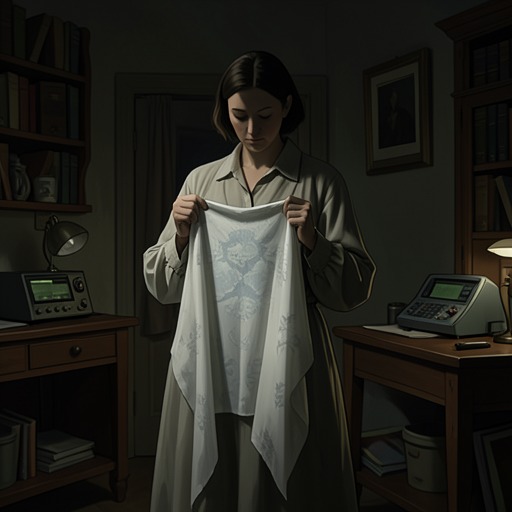
At dawn, Catalina arranges for blood to appear on the bed sheet as evidence that would satisfy the suspicious observers she anticipates. There will be no formal showing of the sheets to the king and his bride, but she expects others to ask, and ensures that her ladies can report seeing the stain. She then performs the customary signs of a newly married woman: resting in the morning, appearing modest, moving stiffly, and declining to hunt for a week. The performance persuades those around her, helped by their readiness to believe it. A concealed injury leaves her with a lasting physical reminder of the deception, while her outward conduct makes the story appear socially legible and credible.
The Lie as a Long-Term Wager
Catalina understands the cost of the claim in relation to Arthur, whom she remembers as her beloved husband. She believes that Harry wants to believe he has succeeded where Arthur could not, and that his pride makes the agreeable account easier to accept than an unwelcome truth. Her account of the marriage therefore carries two distinct deceptions: she represents herself as a virgin, and she allows Harry to believe that he has surpassed his brother. The first protects her position; the second exploits the rivalry and vanity she perceives in him.
The claim persists for twenty years of marriage. Catalina says that Henry VIII came to understand that she had not been a virgin when they married, but that he challenged her only once, at the beginning. She presents this history as the basis for her final gamble: if she stands before him, he may not dare to state publicly that she was Arthur’s wife and lover before she became his. At the marriage court, she has prepared no defense and does not recognize the proceedings, yet when the usher calls for her, she answers by entering the hall. She stakes her case on Henry VIII’s weakness and on his reluctance to expose the truth about her relationship with Arthur. The evidence ends with her standing before the throne; it does not establish how the court rules.
Significance
The deception converts a disputed account of intimacy into a durable political instrument. Its force depends on more than Catalina’s assertion: it requires her parents’ cooperation in seeking a dispensation, the ambassador’s confirmation, the appearance of proof after the wedding, and the willingness of others to accept what they expect to see. In the final courtroom scene, the same claim changes function once more. What began as a path toward marriage becomes the foundation of Catalina’s defense against its dissolution, and her entrance turns a story she has repeatedly maintained into a public challenge to the king.